
Reiki is a Japanese energy healing practice that focuses on relaxation, mindfulness, and supporting overall well-being. Many Reiki practitioners include self-cleansing in their daily routine to feel balanced, release emotional tension, and prepare themselves for healing sessions. Reiki self cleansing can involve meditation, mindful breathing, hand placements, and other personal wellness practices.
Whether you are new to Reiki or have completed a Reiki training course, learning how to practise self-cleansing can help you develop a consistent routine. This guide explains its importance, the cleansing process, self-care tips after sessions, and common questions about Reiki energy healing.
What Is the Importance of Self Cleansing in Reiki?
Self-cleansing is a personal practice that Reiki practitioners may use to prepare for a session, relax after working with others, or maintain a regular mindfulness routine. It encourages practitioners to pay attention to their emotional state, physical comfort, and mental well-being.
Some important benefits of practising Reiki self-cleansing include:
- Relaxation: Quiet breathing and meditation may help reduce everyday stress.
- Emotional awareness: Taking time for yourself can help you recognise your feelings and reactions.
- Better focus: A regular routine may help you feel more prepared before a Reiki session.
- Mindful self-care: Self-cleansing encourages you to create time for rest and reflection.
- Consistent practice: Daily Reiki exercises can help beginners become more familiar with hand placements and meditation.
Reiki is a complementary wellness practice, and its proposed energy-based effects have not been conclusively established by scientific research. It should not replace professional medical or mental health care.
Reiki Self Cleansing Delhi
People interested in Reiki in Delhi may explore self-cleansing techniques through introductory workshops, Reiki training, or guided practice sessions. Learning the basics can be helpful for beginners who want to understand how to incorporate Reiki into their daily wellness routine.
When choosing a Reiki practitioner or learning programme, consider their training, experience, teaching approach, and willingness to explain what the practice involves. A good learning environment should encourage questions, respect personal boundaries, and avoid promising guaranteed health outcomes.
Sangeeta Healing Temples is a name readers can explore when researching Reiki-related learning and wellness practices. Before choosing a session or course, check the available services and confirm that they match your individual needs.
For beginners in Delhi, a simple starting point is to set aside five to ten minutes daily for quiet breathing, comfortable hand placements, and mindful reflection. You can gradually develop a routine that feels manageable and comfortable.
How Do You Cleanse Yourself After Sessions? Self-Care Tips
After a Reiki session, some people prefer to spend a few minutes resting before returning to their regular activities. Self-care after a session does not need to involve a complicated ritual. Simple practices can help you feel comfortable and grounded.
Consider these tips:
1. Drink water according to your needs
Stay hydrated throughout the day. Drinking water supports normal bodily functions, although it does not specifically remove negative energy.
2. Practise slow breathing
Sit comfortably and take a few gentle, unforced breaths. Avoid forcing deep breathing if it makes you uncomfortable.
3. Rest for a few minutes
Give yourself time to relax after the session. You may sit quietly, listen to calming music, or spend a little time away from distractions.
4. Notice your emotions
Ask yourself how you feel physically and emotionally. Writing a few observations in a journal can help you recognise patterns in your mood and stress levels.
5. Maintain healthy boundaries
If you practise Reiki on other people, allow yourself adequate breaks between sessions. You are not responsible for carrying another person’s emotions, and it is important to maintain professional boundaries.
These self-care practices can complement Reiki without requiring you to follow strict or uncomfortable cleansing rituals.
Reiki: How Energy Healing Works
Reiki originated in Japan and is commonly practised through gentle hand placements, either on the body or just above it, depending on the practitioner’s approach and the recipient’s preference.
Practitioners describe Reiki as a practice involving universal life energy. During a session, they generally aim to create a calm environment where the recipient can relax.
A typical Reiki session may include:
- A brief discussion about comfort and expectations.
- Sitting or lying in a relaxed position.
- Gentle hand placements or hands held above the body.
- Quiet rest in a peaceful environment.
- A short discussion after the session, if appropriate.
Some people report feeling relaxed or peaceful during Reiki, while others may notice no particular sensation. Individual experiences vary.
Scientific evidence has not established the existence of the proposed Reiki energy mechanism or demonstrated that Reiki can reliably treat specific medical conditions. It is best understood as a complementary practice for relaxation and personal well-being rather than a substitute for evidence-based treatment.
Reiki Cleansing Process
The Reiki cleansing process can vary according to the practitioner’s training and tradition. For personal practice, beginners can start with a simple routine that combines a calm environment, mindful breathing, and familiar Reiki hand positions.
Step 1: Prepare a quiet space
Choose a comfortable area where you can sit without interruption. Keep your surroundings simple and switch off unnecessary distractions.
Step 2: Set an intention
Take a moment to decide what you want from your practice. Your intention might be relaxation, improved focus, or greater awareness of your emotions.
Step 3: Centre yourself
Close your eyes if comfortable and breathe naturally. Notice your posture and allow your shoulders to relax.
Step 4: Practise Reiki hand placements
If you have learned Reiki, place your hands gently on comfortable areas of your body, such as your chest or abdomen. Avoid pressure on painful or injured areas. Follow the hand positions taught in your training.
Step 5: Finish with reflection
When you are ready, slowly return your attention to your surroundings. Notice how you feel and resume your activities at a comfortable pace.
Consistency matters more than duration. A few quiet minutes may be easier to maintain than a long routine that feels difficult to follow.
What Happens During a Reiki Energy Healing Session?
A Reiki energy healing session usually takes place in a quiet and comfortable setting. The practitioner may begin by explaining the process and asking about the recipient’s comfort preferences.
The recipient generally remains fully clothed and sits or lies down. The practitioner then uses gentle hand placements or holds their hands above selected areas of the body. Touch should always be discussed and agreed upon beforehand.
During the session, people may experience warmth, relaxation, sleepiness, or a sense of calm. Others may simply spend the time resting without noticing any unusual sensations.
After the session, the practitioner may allow time for the recipient to sit up slowly and share feedback. There is no single experience that everyone should expect, and feeling no noticeable change does not mean that someone has performed the session incorrectly.
If you experience persistent discomfort or have a health concern, consult an appropriately qualified healthcare professional.
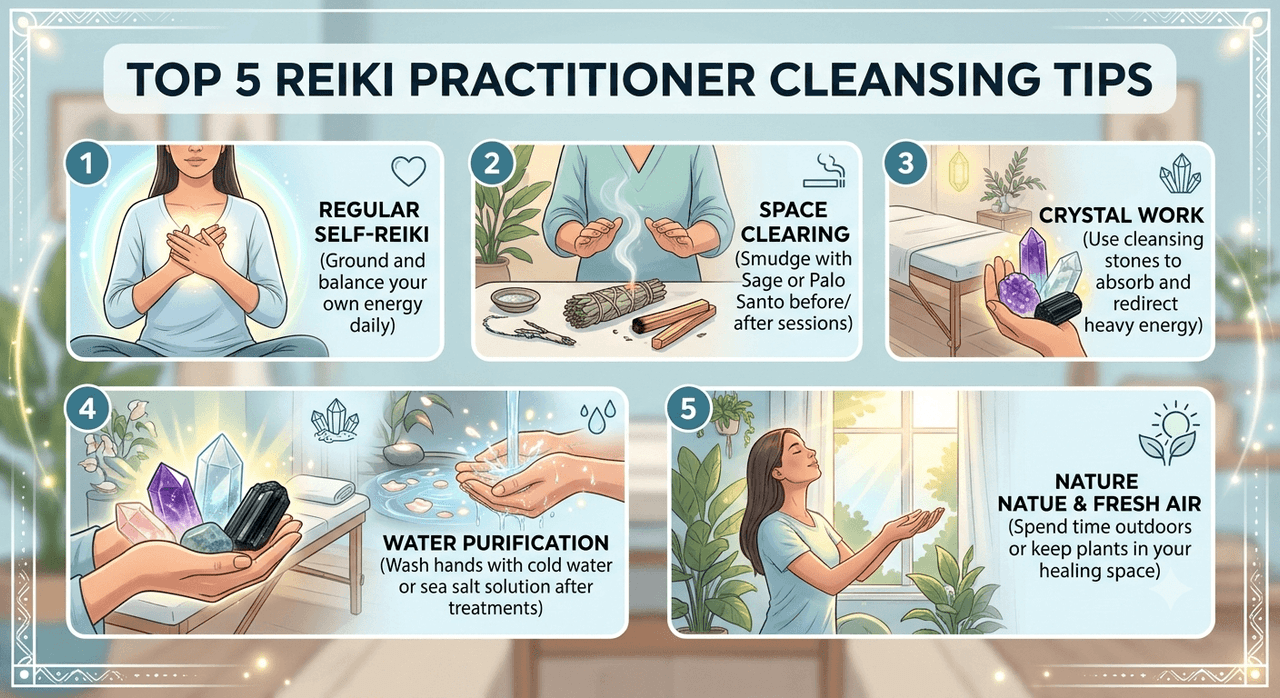
Top 5 Reiki Practitioner Cleansing Tips
Reiki practitioners can develop simple habits to support their own well-being and create a more comfortable session environment.
1. Begin with personal grounding
Before working with a client, take a few moments to settle yourself. Gentle breathing and quiet reflection can help you focus on the session ahead.
2. Follow your Reiki training
Use the hand placements, preparation methods, and closing practices taught within your Reiki tradition. Different schools may recommend different approaches.
3. Take breaks between sessions
Avoid scheduling sessions so closely that you have no time to rest. Short breaks can help you maintain concentration and manage fatigue.
4. Keep your practice space comfortable
Maintain a clean, ventilated, and uncluttered room. Comfortable lighting, a suitable temperature, and a calm atmosphere can support relaxation without requiring elaborate arrangements.
5. Respect consent and personal boundaries
Explain what the session involves, ask before touching someone, and respect their preferences. Never suggest that a client must stop medical treatment or depend exclusively on Reiki.
These habits support responsible practice while helping practitioners maintain a sustainable wellness routine.
People Also Ask About Reiki Self Cleansing
What Is Reiki Cleansing?
Reiki cleansing is a term used for practices intended to prepare for or conclude Reiki sessions and support personal relaxation. These practices may include meditation, mindful breathing, and Reiki hand placements. The idea of removing negative energy is part of spiritual Reiki traditions rather than a scientifically established process.
Is It Possible to Do Reiki on Yourself?
Yes. Self-Reiki is commonly taught as part of Reiki training. Practitioners use familiar hand placements, quiet breathing, and focused attention while sitting or lying comfortably. Beginners can learn the basic positions from a qualified Reiki teacher and practise at their own pace.
What Are the 5 Rules of Reiki?
The five Reiki precepts are commonly expressed as principles for daily living: do not be angry, do not worry, be grateful, work diligently, and be kind to others. They are often practised as reminders to develop patience, gratitude, responsibility, and compassion. Wording may vary between translations and Reiki traditions.
What Is the 21-Day Cleanse After Reiki?
The 21-day Reiki cleanse is a practice described in some Reiki training traditions following an attunement or initiation. It may involve daily self-Reiki, meditation, reflection, and attention to personal habits. Experiences vary, and there is no established scientific evidence that everyone must undergo a specific 21-day detoxification process after Reiki training.
How Can You Make Reiki Self Cleansing Part of Your Daily Routine?
Reiki self cleansing can be approached as a simple personal wellness habit rather than a complicated ritual. Setting aside a few minutes for meditation, self-Reiki, and reflection may help you create space for relaxation and emotional awareness.
Start with a routine you can comfortably maintain, follow the guidance of your Reiki tradition, and remain realistic about what the practice can offer. If you want to explore Reiki further, research suitable learning options and ask questions about the practitioner’s training and approach before booking a session.
Sangeeta Healing Temples can be included in your research when exploring Reiki-related learning and wellness services. Choose a practice that respects your comfort, personal boundaries, and wider health needs.